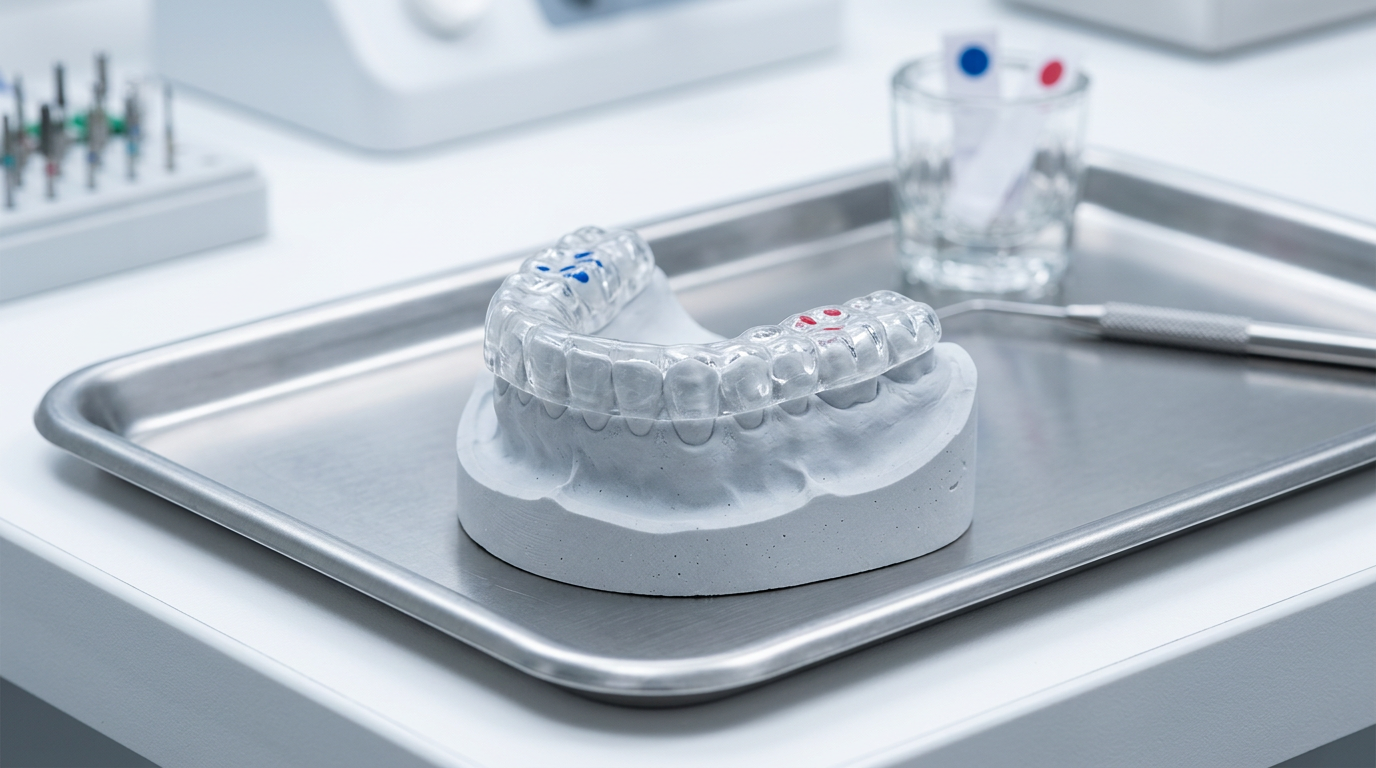
A dental splint (also called an occlusal splint or bite splint) is a custom-made appliance that fits over your upper or lower teeth. It is used to treat jaw joint (TMJ) problems, jaw pain, headaches linked to clenching or grinding, and bite-related discomfort. The splint repositions or cushions the jaw, reduces muscle strain, and protects your teeth from wear. Unlike a one-size-fits-all product, a custom splint is made from impressions or scans of your teeth so it fits precisely and works with your bite.
At Brown Street Dental, Dr. Sunny Golwala and our team assess your jaw, bite, and symptoms before recommending a splint. We take impressions or digital scans and have the splint made in a laboratory. After fitting, we may need one or more adjustments so it feels comfortable and your bite is balanced. We will explain how and when to wear it (often at night), how to look after it, and what to expect. Our goal is to relieve your discomfort and protect your teeth with a splint that fits well and is comfortable to wear.
The Process
-
Assessment
We will:
- Discuss your symptoms—jaw pain, clicking, headaches, grinding, or bite discomfort
- Examine your jaw joint (TMJ), muscles, and bite to see if a splint is appropriate
- Explain how a splint works and what type is best for you (e.g. soft vs hard, upper vs lower)
- Answer your questions about wearing the splint and how long you may need it
-
Impressions or Scan
To make your custom splint:
- We take an impression of your teeth (with a soft material in a tray) or use a digital scan
- Sometimes we also record your bite position so the lab can build the splint to the right height and alignment
- The process is straightforward and comfortable
-
Fabrication
Your splint is:
- Made in a dental laboratory from your impression or scan
- Designed for your specific needs (e.g. TMJ relief, bite repositioning, protection from grinding)
- Usually ready within one to two weeks; we will tell you when to return for fitting
-
Fitting & Adjustments
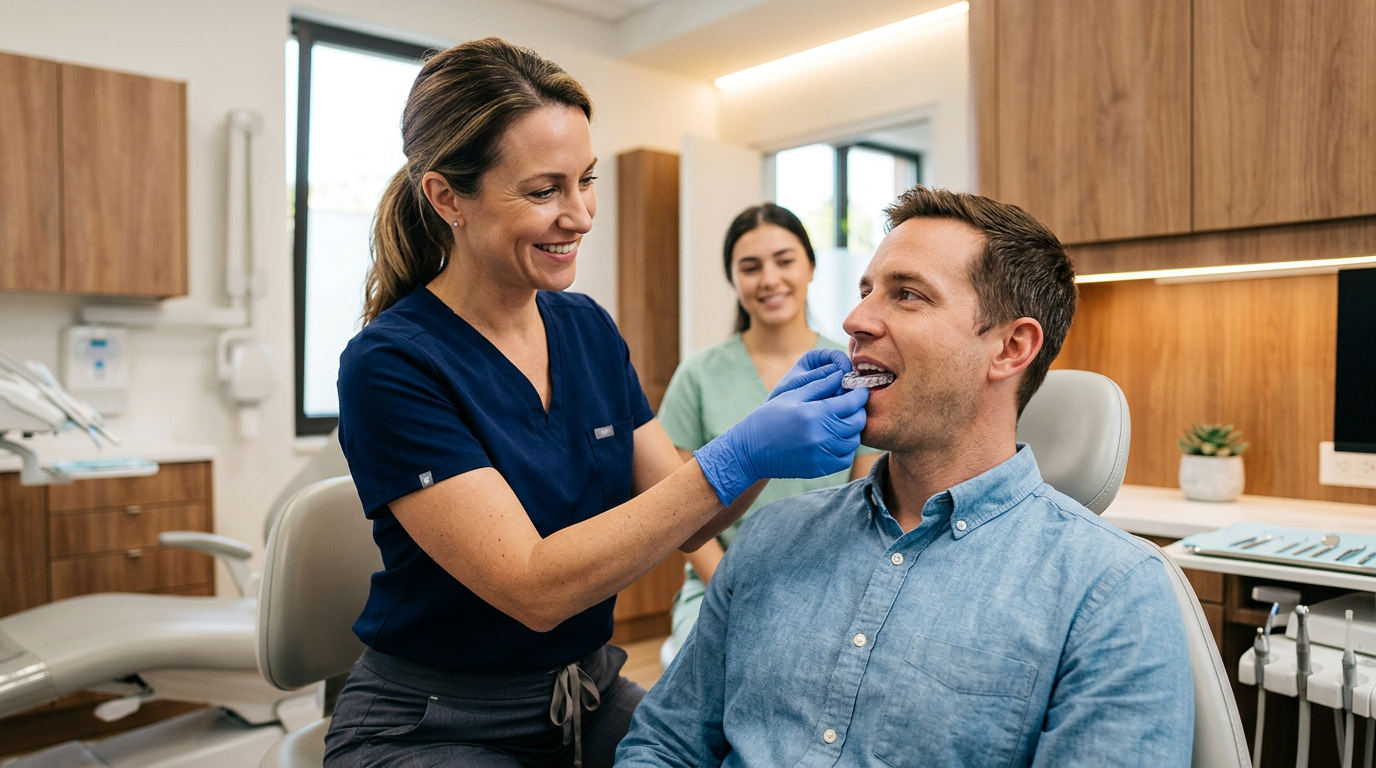
At your fitting we will:
- Check the splint fits comfortably and your bite feels even when you close
- Make small adjustments (trimming or adding material) so it does not cause pressure points or discomfort
- Show you how to insert, remove, and clean it
- Arrange a follow-up to check how you are getting on and fine-tune if needed
Benefits of Custom Splints
Why a professionally made splint helps
- ✓Relieves jaw pain and muscle tension linked to clenching and grinding
- ✓Can reduce TMJ clicking, locking, or discomfort
- ✓May ease headaches and facial pain caused by bite or jaw issues
- ✓Protects teeth from wear and chipping from grinding
- ✓Custom fit means better comfort and effectiveness than generic appliances
- ✓Adjustable—we can refine the fit over time for the best result
Frequently Asked Questions
-
What is the difference between a splint and a night guard?Both fit over the teeth and can protect from grinding. A night guard is mainly a cushion between the teeth. A splint is often designed to reposition the jaw or correct the bite slightly to relieve TMJ and muscle pain. We will recommend the right type based on your symptoms—sometimes a splint is better for jaw and headache relief.
-
When do I wear the splint?Most people wear an occlusal splint at night while sleeping, when grinding and clenching often occur. Some splints are worn for part of the day as well, depending on your treatment plan. We will give you clear instructions at the fitting.
-
How long until I notice improvement?Some people notice less jaw tension or headache within a few weeks of wearing the splint consistently. Full benefit can take longer. We may need to adjust the splint once or twice to get the best fit and comfort. We will review your progress at follow-up appointments.
-
How do I look after my splint?Rinse it after use and clean it with a soft toothbrush and mild soap (avoid toothpaste, which can scratch). Store it in a vented case when not in use and keep it away from heat. Bring it to your checkups so we can check the fit and condition and advise when it may need replacing.
-
Will I need to wear the splint forever?It depends on your situation. Some people wear a splint long term to manage grinding and jaw comfort. Others use it for a period and then reduce or stop under our guidance. We will discuss this with you and review as needed.
-
What if the splint feels uncomfortable?Tell us. We can adjust the fit—trimming high spots or adding material—so it feels comfortable and your bite is even. It is normal to need one or two adjustment visits after the first fitting. Don’t wear a splint that causes pain or rubs; we will help you get it right.
Have jaw pain, TMJ symptoms, or headaches that might be bite-related? Contact Brown Street Dental to book an assessment.